
Coming Attractions
Next week, on April 29th, I’ll talk with Dr. Sonja Santelises, outgoing CEO of Baltimore City Public Schools on her run in Baltimore and what she’s learned. You can join and ask questions. That’s brought to you by Bellwether and The 74.

Podcasts
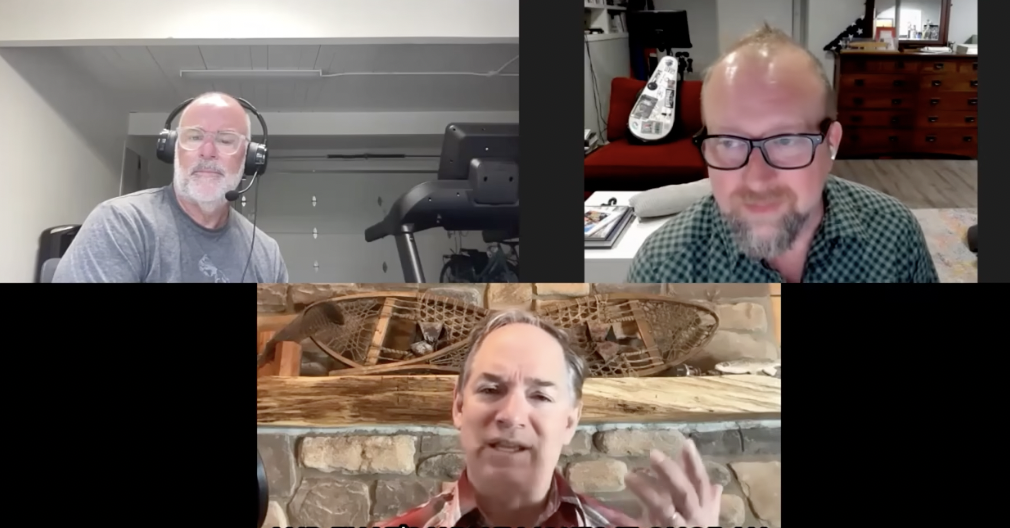
I joined the guys on the If You’ve Come This Far podcast to talk about work and life, and why education reform is frustrating but essential and possible. More through that link.
On WonkyFolk, Jed and I talked with DFER’s Jorge Elorza about the new tax credit and his plans for DFER. Jorge thinks the tax credit is a way forward for Dems, is he right?
Listen here or wherever you get podcasts:
A Bet
One thing we talk about on the WonkyFolk podcast is this new Senate bill, introduced by Senator Kelly (D-AZ) with more than 30 co-sponsors, including a few who might surprise. It would repeal the new federal education tax credit program.
The regulations are not even out yet. It’s unclear how many taxpayers will participate but the possible market of eligible taxpayers is substantial, potentially generating billions for educational activities. There are public school advocates already ramping up to build programs to participate along with private school efforts. And given how it’s constructed a lot of Blue states may end up opting in (and several of the Senate co-sponsors, including Kelly, represent states where ESAs are already operating). If the Trump Administration produces divisive regulations intended to foment Blue on Blue friction, then this bill will seem prescient and become a Red – Blue flashpoint. If the regulations come back in a more expansive way, with a clear path for public school-facing options, then these Senators may have just walked into a political trap. Stay tuned.
Want Eduwonk.com in your inbox via Substack? Sign up for free here.
Three Experiments
I was at ASU-GSV last week (see here for more on that rave) and one session I wanted to be sure to check out was Norm Atkins and Ben Riley talking about AI and schools. Two really smart people with actually divergent perspectives is a good opportunity — especially because in the education world most panels are Vanilla, French Vanilla, and maybe, if you’re lucky, Cherry Vanilla! That’s considered a broad range of perspectives.
At one point, Ben took issue with something someone, not Norm, said about evidence and pointed out that the evidence base around AI and schools is pretty thin so a lot of what’s happening amounts to a big experiment. Ben’s right about that. Given the totality of the knowns and unknowns I think reasonable people can disagree about the appropriate approach to AI in schools as a result. This also seems like a place where giving parents more choice might help. But short answer? Yes.
But if we’re being honest this current generation of students have experienced not one experiment, but three at the hands of the adults.
First, today’s college students and recent graduates were the first generation to get pretty unfettered access to social media. Intense social media. That didn’t go well! Jonathan Haidt has documented the impact on young people, especially girls, and especially around mental health. Yes it’s not experimental but the totality of the data is pretty convincing. Plenty of room for disagreement about the wisdom of bans or other remedies, you don’t have to go the full Haidt, but it’s pretty clear this is not good for young people.
The second experiment was school closures. The spring of 2020 was chaos as we learned about a novel virus, and it’s hard to second-guess decisions made in the midst of that. But summer 2020, Fall 2020, and into 2021 it was pretty obvious schools could reopen but they didn’t, largely because of politics. David Zweig does an excellent job laying this out in An Abundance of Caution. This not only radicalized a lot of parents because it broke trust — it was a disaster for millions of kids. NAEP scores, which had been trending gradually down, went off a cliff. State tests and other measures of achievement reflected the same. And teachers reported kids at all levels suddenly lacking skills or abilities similar students previously had.
It turns out, apparently surprisingly for some, that just closing schools for the better part of a year, more in many cases, wasn’t a good idea or good for learning. And all the stuff about how kids were learning more out of school, or at protests, or whatever, was the talk of irresponsible adults parroting nonsense and posing as chic revolutionary thinkers.
And then, of course, AI. Wherever you come down on the AI debate it’s pretty clear that allowing kids to offload or avoid the hard work of learning is a costly mistake. Early evidence is starting to bear this out. Everyone from MIT to Bellwether, not to mention the intution of a lot of teachers, suggests that AI-assisted work can reduce the kind of effortful processing that actually builds durable knowledge and skills. Students who use AI to do writing or problem-solving may produce better-looking outputs in the short run while not learning what they need in the long run. But addressing that means developing better tools grounded in how people learn, not the gauzy futurism of 21st Century Skills. That means training teachers, real change-management to support them, and engaging with knowledge and content in a way that the system has only done sporadically, never at scale.
There is not enough of that happening. I find the claims of the AI doomers overstated. But I find the way the sector is blithely walking into this alarming as well. That’s true in K-12 and higher ed. Last week we talked about the need to untangle whether AI is a novel technology from the question of whether schools will adopt it in ways that are different than the lackluster results of ed tech 1.0.
Innovation is vital. It’s another word, though less precise, for experiment. And we should always be cognizant of the counterfactual — an education system that is not working particularly well at any scale and especially for Americans who need it the most.
Still, we should also be less cavalier and more mindful of what many young people in their teens and early-20s have experienced. And how we haven’t done them any favors over the past 15 years and what the consequences of that might be for them.
Want Eduwonk.com in your inbox via Substack? Sign up for free here.
What They’re Sayin’
Noah Smith on liberalism and education:


View the original article and our Inspiration here